
When changemaking becomes control
Confessions of a changemaking control freak

Welcome to Becoming Guides! If you are new here, this piece builds on a series I was inspired to start, back with Is the Climate Movement Finally Growing Up? This was followed by a few more, the recent being about Cabals in our changemaking space. These pieces are intended to be compassionate interventions, provocations asking us to be honest with ourselves, in service of leveling up our changemaking game. Because let’s face it, the world needs us to. This and all of my work comes from the premise that if we translate evidence-based psychological best practices, into how we work with others in service of our planet, almost everything changes. And I mean, everything. Thanks for being here and please consider a paid subscription, as every bit of support goes right into the costs of writing my forthcoming book with Viking, So You Want to Change the World: Creating the Future You Want from the Inside Out.
I want to start with something I don’t always like to admit.
For all my years of helping others in the changemaking space become more self-aware about control issues, I have my own. (Surprise!) It’s just as real and sticky as the patterns I am good at naming in the clients and teams I work with. And it shows up in the places I care about the most. Of course!
My first encounter with my “inner-controlling-changemaker” goes back to my late teens in the late 1980s. I was a freshman at UC Santa Cruz, in need of a part-time job, when I came across an ad from the California Public Interest Research Group, CalPIRG. The work was canvassing door-to-door for environmental and consumer protection campaigns: water policy, recycling, toxic exposures, nuclear energy. These were the issues that had been keeping me up at night since I was fifteen, and finding a job that would pay me to talk about them felt like a small miracle! I joined the team hopeful and excited. I got the hat, the clipboard, a packet of stickers and brochures, an envelope for donations, and of course, a script with talking points. My compensation was tied to signatures and dollars collected. The pressure was on to close the deal with everyone I spoke to.
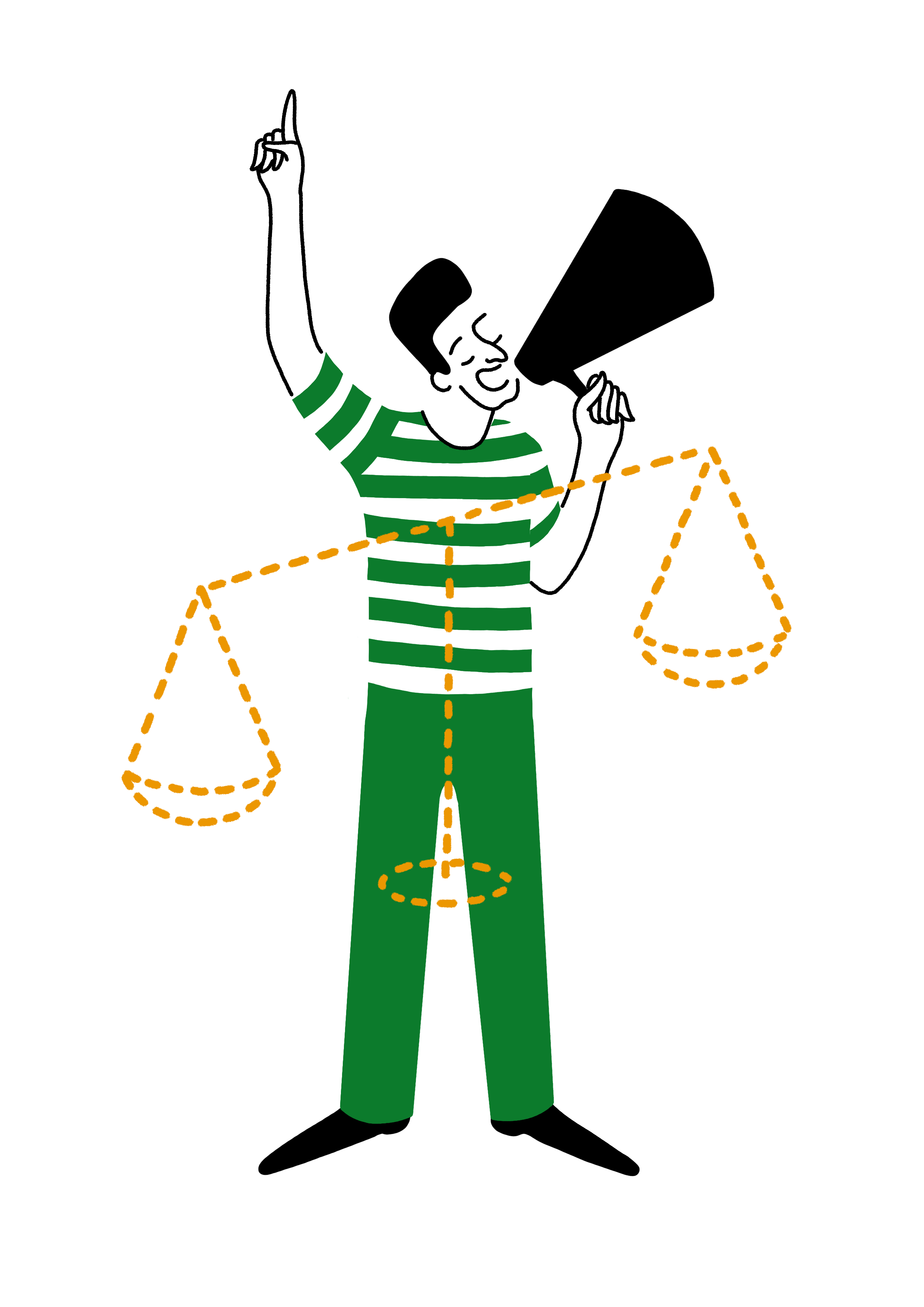
I’d set out in the early evenings through the serene wooded neighborhoods of Monterey, Santa Cruz, and Carmel, lined with oak and bay trees, ringing doorbells, painfully aware that I was often interrupting somebody’s dinner. Sometimes people would let me give my scripted spiel, though I could see in their eyes long before they officially said no, that I wasn’t going to get anywhere. Other times the door closed in my face. And other times the conversation got super charged for reasons that didn’t seem to have anything to do with the ballot initiative or the campaign. I went home most evenings wrung out.
Looking back, I can now what was going on. My care for the planet, for the rivers and forests, for the communities downstream from whatever toxic exposure was on the ballot that month, was completely real and urgent for me. And from the moment I picked up that clipboard, my care expressed itself as a wish to make the encounter go a particular way. I wanted them to care. I wanted them to pause and say, Tell me more. I wanted the signature, the donation, the visible shift in the person in front of me. Really, I wanted connection. The script in my hand was the form my care took. The metrics on my pay stub were the form my care took. The contraction in my chest each time a door closed was the form my care took. Even my eventual burnout was a sign of what it’s like to care and feel like nothing is landing.
I eventually figured out something different, and you can read about that part of the story in my forthcoming book. What I want to invite us to consider in this piece, though, is the part that came first. The part where caring deeply about something I could feel was urgent translated into a need to control how the people in front of me responded.
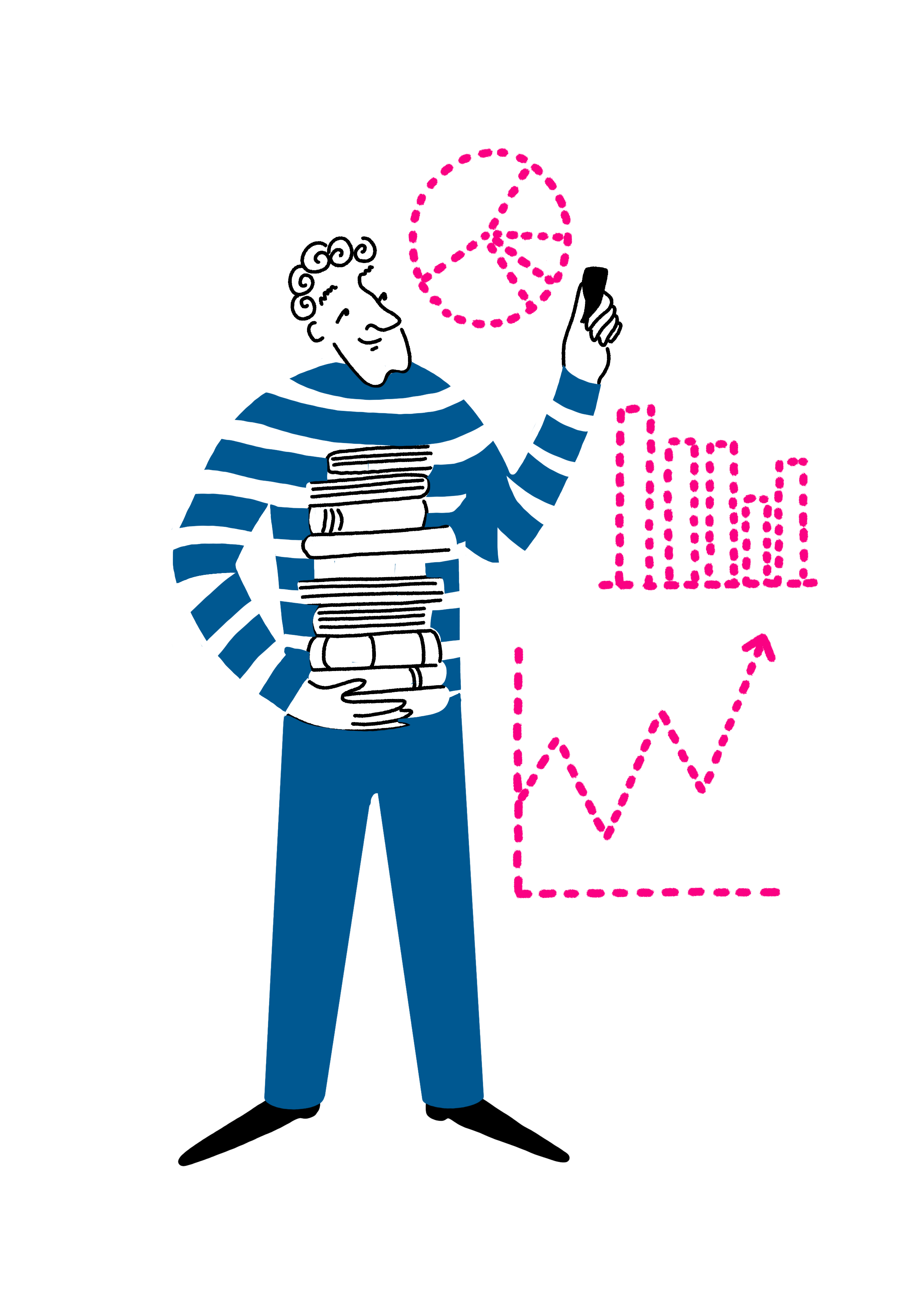
Decades later, that reflex is still with me. It shows up more often than I’d like to admit.
It shows up in client engagements where the stakes feel high. It shows up in strategy sessions when someone raises a question that completely activates me. It shows up in moments of grief about what is happening to our planet, when the easiest move is to reach for something to do. Not to just be with the feelings.
This is the territory I want to open up in this work on Becoming Guides. In Is the Climate Movement Finally Growing Up? I argued that those of us in the field are being asked to mature in how we understand our own work. In The Cabals of Change I mapped four dominant orientations in our change work — behavior change, messaging and storytelling, tech solutions and emotional processing — and the presumed, confident authority each one carries as a theory of change.
Now I want to ask: what is actually deciding which orientation any of us reaches for in a given moment, when so much is at stake and so little feels secure?
My answer, which I’ve been circling for some time, and indeed am writing actively about now for my new book, is that the deciding factor is rarely the situation in front of us. More often, it’s something we almost never name out loud, even with ourselves.
It is our own desire for control.
The filters we don’t know we are using
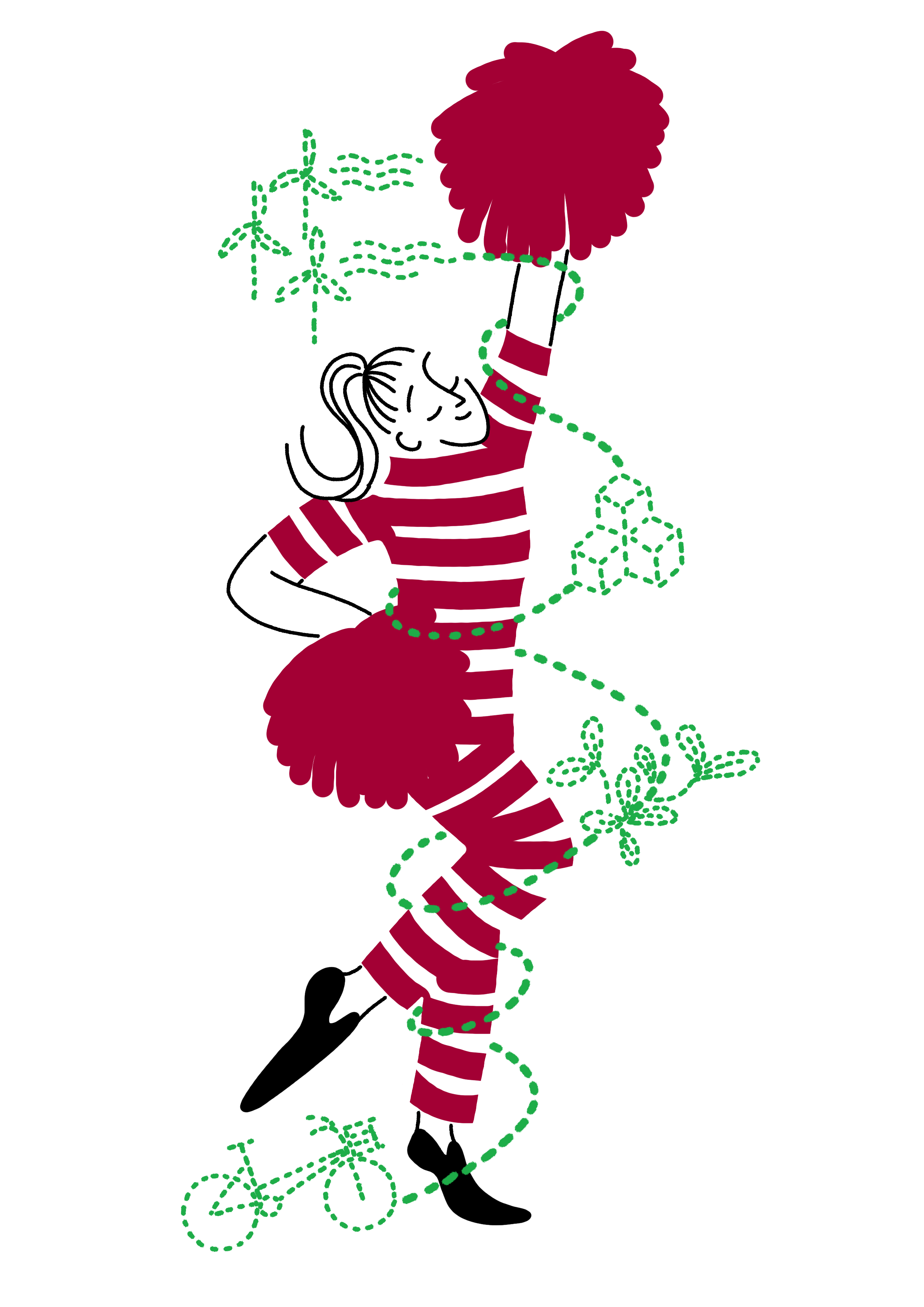
Once you begin to notice the desire for control, it’s everywhere in the way many of us talk about our work. We talk about getting buy-in, moving the needle, scaling impact, driving change, mobilizing audiences. We talk about influencers and influence. The vocabulary itself reveals a lot about an equation of changemaking with control.
I think that in our language, we are revealing an underlying desire to make change happen, and to control as much as we can.
We are defaulting to the underlying reflex, inherited over years of conditioning, of transaction—not relationship.
Most of us already know, intellectually, that real change doesn’t work this way. We know this from our own lives if we use our experience as a data point. Think about it, and major changes in your life were probably the result of many, many influences and factors, from people who influenced you, to a class to a book you read or a trip you took. So we know this. We’ve read the books, we’ve sat in the workshops. We’ve nodded at the case studies that put the relational dimension at the center. And yet, the moment we are back inside our own work, in a room where the stakes feel high, and the time feels short, the old reflex reasserts itself.
Approaches that promise predictability, measurability, and replicability feel like real strategy.
Approaches that ask us to slow down, attune, hold space, or work with what is actually present, feel like preludes to strategy at best. Often, they don’t even register as candidates. We get antsy as hell and want to move on. Quickly.
Can you relate?
This is the filter I want to call out; it’s not a methodology, it’s a perceptual mechanism, quietly deciding which approaches we even see as serious in the first place. And it is so naturalized in our field that we mistake it for rigor.
‘Growing Up’: Transparency, Self-Awareness and Humility
In Is the Climate Movement Finally Growing Up? I argued that the field is being asked to mature. Part of what I meant by that has to do with better tools and more sophisticated framing. But the deeper layer, the one I keep returning to, is the maturity of being able to see the filter that has been doing the choosing for us. To recognize that some of what we have been calling strategy is something else. To begin to ask, with honesty, what we have been afraid of letting go of, and whether holding on to it has actually been serving the work.
The desire for control is not a personal failing. It is not a flaw of the field. It is a deeply human response to fear, grief, and the magnitude of what is being lost.
Those of us doing this work are not, as a rule, short on care. The opposite. We are people who have made our lives largely about the things we cannot bear to see destroyed. Forests. Coastlines. Communities. Democratic institutions. The basic conditions for the children we love, to have a life we recognize as a life. When we sit with what is actually happening to those things, the impulse to do something, anything, that will reliably push the outcome in the direction we need is not a strategic failure. It is grief moving through us, looking for expression and impact in the world. That is what’s needed.

The trouble is that when operating unconsciously, grief on the move tends to reach for whatever feels solid. And the approaches that feel most solid are almost always the ones that promise the most control. The campaign with the clearest KPIs. The intervention with the biggest scale. The strategy with the cleanest arrows. The metric we can pin to the wall and watch climb.
This is what I mean when I say our TOCs (theories of change) tighten under pressure. The higher the stakes feel, the more reflexively we reach for the approach that promises a predictable outcome. Storytelling! Messaging! The right narrative! Emotional process circles! Nature connection! Arts-based therapies! And so on. Even when something quieter and slower is right in front of us, asking to be tried. The filter is not just out there in the field. It is operating in our own nervous systems, in the moments we choose between approaches and reach, without fully realizing we are reaching, for the one that asks less of our tolerance for uncertainty.
I have done this. I still do this. The CalPIRG version of me, with the clipboard and the script, has never fully left the building. She has changed costumes a few times. But the underlying energy, the grip toward making an encounter go a particular way, is the same energy. And it shows up most strongly in the moments when the stakes of caring feel highest.

A different question
I am not suggesting we stop using metrics, or stop reaching for strategy, or stop wanting our work to make a real and recognizable difference in the world. We need all of that.
The question is what energy is underneath it — is it about control, or is it about creating conditions for collective change? Is it transaction or relational?
What if the question that decided our approaches were not which approach is most likely to produce the outcome I can name in advance, but which approach is most likely to help cultivate the conditions that enable others to come forward and contribute? Without my having to push, sell or convince?
That second question doesn’t sound, on its face, particularly radical. But it asks us to be in relationship with others and our situation, rather than above it. And it asks us, sometimes, to choose the approach that promises less control, because the situation is asking of us to actually level up our approaches in service of relationship.
That is the harder choice. That is also, in my experience, the more honestly strategic one, because it begins from where things actually are rather than from where we have decided they need to be.
My invitation is not to abandon the approaches we already trust. It is to begin to notice the filter that has been quietly choosing among them. To notice the small relief in the body when a metric appears in the room. To notice the discomfort, also in the body, when an open question hangs in the air longer than feels productive. To notice the moments when we are reaching for the most controlling option not because the situation has asked for it, but because some part of us cannot quite bear to do anything else.
The noticing is where this work begins. And it begins, as it always has, on the inside. And in community with others who are brave enough to embody humility, curiosity, and the ability to let go of control.
Come join us! Subscribe to this Substack and stay up to date on announcements, news and forthcoming offerings.
If you’d like to see this work scale into the world, or help your team or org, contact me.
With care,
Renée